
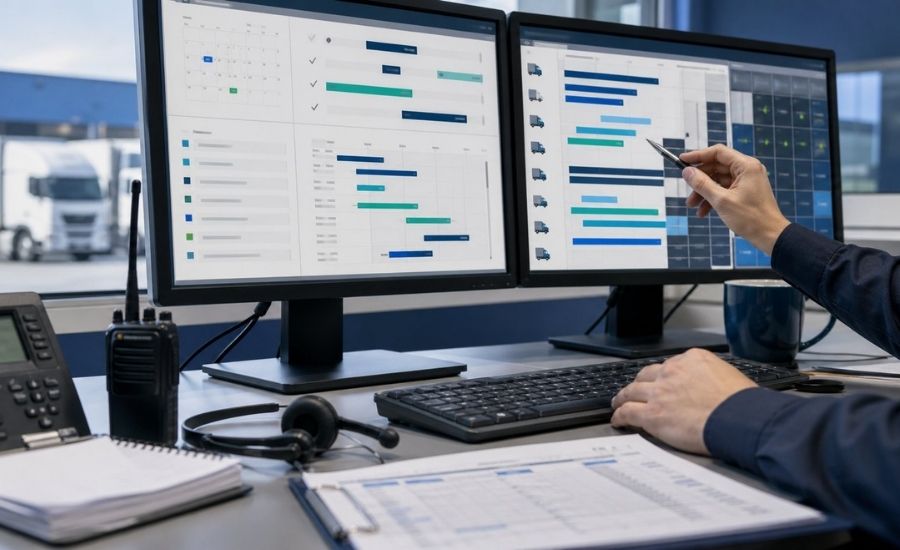
For small carriers and growing fleets, dispatch is the job that never stops. Loads need to be booked, drivers need updates, brokers need check calls, and paperwork has to be right before anyone gets paid. Outsourcing dispatch lets owners and operations managers hand that daily coordination to a trained team, while keeping control of rates, lanes and customer relationships.
This guide explains what outsourced dispatch usually covers, when it makes sense, and how to choose a partner you can trust with your trucks.
What outsourced dispatch services include
Every provider packages things differently, but a full-service dispatch team typically handles:
- Load sourcing and booking – searching load boards and broker networks for freight that matches your lanes, equipment and preferred rates.
- Rate confirmation and paperwork – reviewing rate confirmations, setting up broker packets and keeping documents organized.
- Driver communication – sharing pickup and delivery details, appointment times and route updates.
- Check calls and tracking – updating brokers and shippers on load status so your drivers can focus on driving.
- Issue handling – coordinating detention, lumper fees, reschedules and other surprises as they happen.
- Reporting – summaries of loads, revenue per mile and lane performance so you can see what is working.
When outsourcing dispatch makes sense
Outsourcing is usually worth considering when:
- The owner is dispatching at night after driving or managing all day.
- Trucks sit empty because nobody had time to find the next load.
- You are adding trucks and need dispatch coverage without hiring and training in-house staff.
- You need evening, weekend or 24/7 coverage that is hard to staff locally.
Questions to ask before choosing a dispatch partner
- Who will actually dispatch my trucks? Ask whether you get a dedicated dispatcher or a rotating pool, and how handovers between shifts work.
- How do you decide which loads to accept? A good partner follows your rules on minimum rates, lanes, home time and deadhead.
- What hours do you cover? Make sure their coverage matches when your drivers are on the road.
- How will we communicate? Agree on phone, WhatsApp, email or TMS updates, and on expected response times.
- What reporting will I receive? Weekly reports on loads, miles and revenue help you hold the partner accountable.
- How is pricing structured? Common models include a percentage of gross revenue per load, a flat weekly fee per truck, or a dedicated-dispatcher monthly rate. Compare them against your average weekly revenue.
- How do you protect my data? Ask how logins for load boards, ELDs and factoring portals are stored and shared.
Red flags to watch for
- Promises of guaranteed rates or miles regardless of market conditions.
- No clear point of contact or escalation path.
- Booking loads without your approval or outside your stated rules.
- Vague contracts with long lock-in periods.
How FZM Tech supports carriers and fleets
FZM Tech provides dispatch and logistics coordination for trucking, transportation and delivery businesses. Our team works to your load rules, keeps drivers and brokers updated, and shares structured reports so you always know where your trucks and revenue stand. We can also support related back-office work such as bookkeeping and data entry.
Learn more about our support for logistics and trucking companies.
Ready to take dispatch off your plate? Book a free consultation and tell us about your fleet, lanes and hours. We will suggest a dispatch setup that fits.